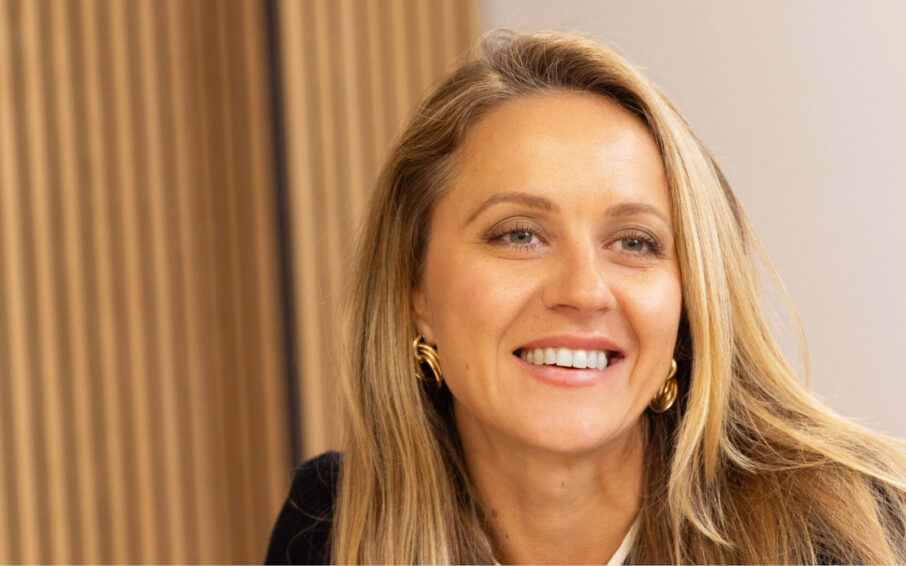
Mirastar CEO and co-founder Ekaterina Avdonina recently sat down with Julie Cruz from Green Street News to discuss what meaningful progress should look like five years from now.
This interview has been edited for length and clarity.
What do you think is the biggest real estate topic of 2026?
Avdonina: The defining theme of 2026 will be navigating global uncertainty while selectively leaning back into growth. Geopolitical tensions, tariff regimes, and volatility across global financial markets continue to affect both capital flows and occupier confidence. Capital has been more cautious, underwriting assumptions have tightened, and many occupiers have delayed long-term commitments. At the same time, we are beginning to see early green shoots. Capital is slowly regaining conviction, pricing is becoming more rational, and in logistics and industrial, we are seeing renewed interest in build-to-suit projects and a gradual pickup in occupier activity. Supply discipline over the past 18–24 months is also creating more balanced fundamentals in certain markets.
In this environment, the differentiator will be execution and stock selection. It is no longer enough to have sector exposure; investors need granular market knowledge, strong tenant relationships and fully resourced, multidisciplinary teams that understand development, asset management, leasing dynamics, and capital structuring.
The opportunity in 2026 won’t be about broad market momentum; it will be about precision and deploying capital into the right assets, in the right locations, with the right operational platform behind them.
What moment in your career most challenged your confidence, and how did you navigate it?
Avdonina: Leading teams through a down market was the most testing period of my career. In real estate, market shifts can be sudden, and decisions made under pressure have long-term consequences for capital, for assets, and for people.
What made it particularly challenging was leading a highly diverse, multidisciplinary team with strong opinions and deep expertise across investment, development, asset management, and operations. In that environment, leadership isn’t about having all the answers. It’s about providing clarity, setting direction, and making decisions when certainty is limited.
Coming from a strong entrepreneurial background helped enormously. Early training taught me to stay close to the detail, focus on fundamentals, and remain comfortable with ambiguity. I learned to break complex problems down, prioritise what truly mattered, and communicate decisions clearly and calmly.
That experience reshaped my confidence. I stopped equating leadership with certainty and instead focused on consistency, transparency, and trust. Navigating difficult markets reinforced that the strongest leaders are not those who avoid pressure, but those who create stability and momentum when conditions are at their most challenging.
What role do senior leaders play in mentoring diverse talent and what should companies be measuring to ensure their diversity efforts are creating real change?
Avdonina: As a senior leader, and as a woman from an Eastern European background who has lived and worked across multiple countries and cultures, I’m very conscious that diversity is not an abstract concept. It directly shapes how teams operate, communicate and make decisions. Senior leaders play a critical role in setting both the tone and the reality of inclusion. That means creating environments where different perspectives are genuinely heard and where talent is assessed on capability and potential rather than familiarity or background. In practice, it also means leading by example, particularly in industries like logistics and industrial real estate, where operational teams and it has to be said, new job applicants, are still predominantly male and diversity can feel harder to achieve.
In our business, we actively measure female representation, pay equity and progression, but we are equally focused on attracting the right talent, regardless of background. Leading a multicultural team has reinforced for me that diversity strengthens execution, especially in operationally intensive sectors, by bringing different approaches to problem-solving, leadership and decision-making. Real progress comes when diversity is embedded into how teams are built and led, not treated as a separate initiative. In challenging, hands-on sectors like logistics, attracting and retaining diverse, international talent requires intention, consistency, and visible leadership commitment, but the results are unequivocally positive.
What advice would you give women aiming for senior roles in real estate?
Avdonina: Build and actively invest in a strong network of other women. In real estate, some of the most powerful professional networks have historically been informal and male-dominated built on golf days, alumni circles, and long-standing personal relationships. Those networks matter because they create trust, opportunity flow and advocacy behind closed doors.
Women often navigate career progression alongside disproportionate pressures around family and caregiving, which can make networking feel secondary or transactional. What I wish I had understood earlier is how important it is to cultivate a trusted circle of like-minded women you can call for perspective, advice or simply reassurance. That support system becomes invaluable during pivotal career moments, for example promotions, setbacks, relocations and leadership transitions.
What does meaningful progress on diversity look like to you in real estate five years from now?
Avdonina: Meaningful progress will be visible at the mid-senior level, where careers can accelerate into real decision-making roles. In five years, I would expect to see more women progressing into investment committee, fund management and capital allocation roles, particularly within listed real estate platforms, where female representation in executive investment positions remains limited.
To achieve that, firms need to focus on retention and exposure. That means inclusive recruitment policies, transparent promotion pathways, fair allocation of high-profile transactions and ensuring that career breaks or flexible working do not unintentionally slow commercial progression. Diversity at the top will only be sustainable if the pipeline beneath it is strong and actively supported.
To read the original article, please visit https://greenstreetnews.com/article/iwd26-in-an-ideal-world-wed-talk-about-diversity-less-because-it-would-simply-be-embedded/
This interview first appeared in Green Street News on March 5th 2026 and was written by Julie Cruz.